


How to Use Large-Scale Antiques in Rooms with High Ceilings
What if the piece most likely to overwhelm a high-ceilinged room is the one that makes it feel complete? Learning how to use large-scale antiques in rooms with high ceilings is not simply a matter of finding furniture with presence. It means giving the eye a considered path from floor to ceiling. An imposing room can feel empty above ordinary furnishings, while a monumental antique may crowd circulation or obscure the architecture.
The key is proportion and visual rhythm. A tall mirror, sculptural chandelier or commanding table can act as an architectural anchor when its scale is balanced with the room’s features and the objects around it. This guide explains how to establish a focal point, connect furniture and lighting across the room’s height, and combine historic character with contemporary restraint. It also covers practical choices when sourcing distinctive antiques internationally, so the result feels composed rather than overwhelming.
Key Takeaways
- Assess ceiling height alongside room width, windows, doors, fireplaces and sightlines before choosing an anchor piece.
- When considering how to use large-scale antiques in rooms with high ceilings, weigh each piece’s footprint and silhouette against circulation and function.
- Use mirrors, lighting and works of art to create a measured vertical rhythm without filling every wall.
- Plan the room first, then choose an anchor piece and layer in details. Insured fine-art shipping makes it possible to source antiques for homes from New York to the Hamptons.
Begin with the architecture: read the proportions of a high-ceilinged room
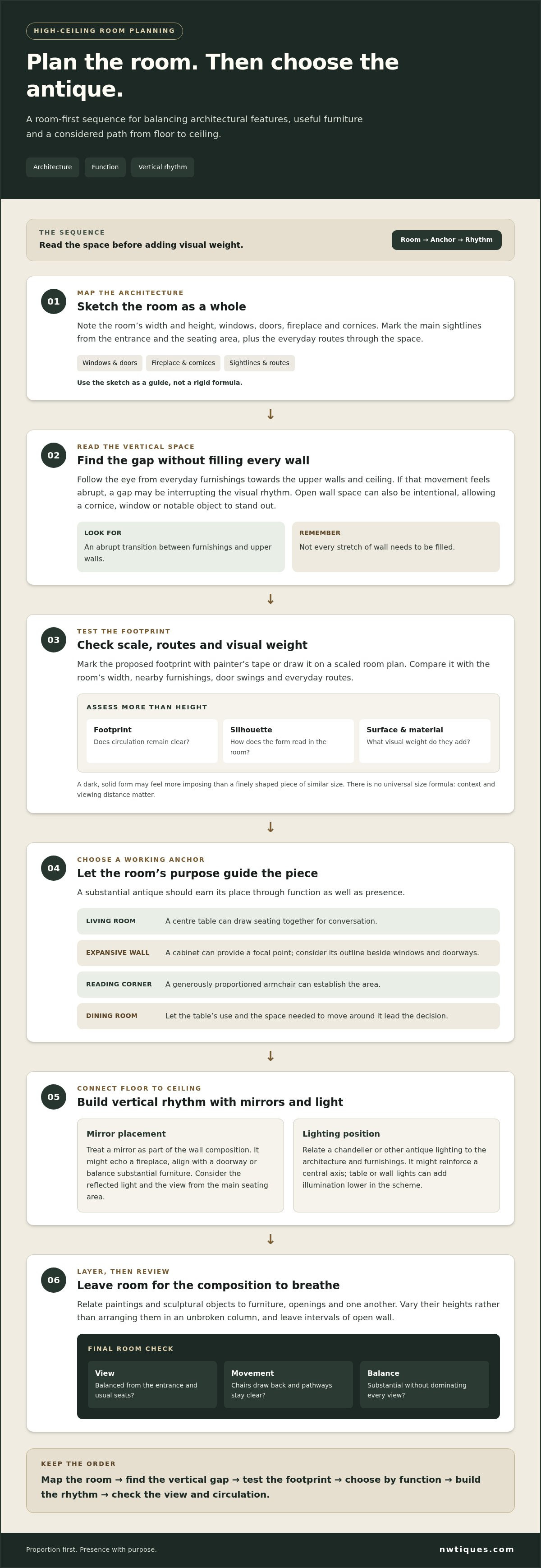
Generous ceiling height can make standard furnishings feel undersized, leaving the upper walls disconnected from the room’s everyday life. Before choosing an antique, read the space as a whole: consider its width and height, the position of windows and doors, any fireplace, and the sightlines from the entrance and main seating area. An antique’s perceived scale depends on more than its height. Its silhouette, material, surface and placement all affect its visual weight. A dark, solid form, for example, may feel more imposing than a finely shaped piece of similar size.
Which architectural features should guide antique placement?
Fireplaces, windows, cornices and doorways already draw the eye, so treat them as anchors rather than rivals. Consider whether a substantial table, mirror or cabinet would reinforce an existing axis or interrupt it. View the room from the entrance and from the seats used most often. A piece that feels balanced from one angle may block a key sightline from another. A New York townhouse and a Hamptons home may have very different proportions, so let the architecture of the individual room guide your choice.
How can you identify an empty vertical zone?
Notice how your eye travels from the furniture towards the upper walls and ceiling. If that movement feels abrupt, a gap may be disrupting the room’s visual rhythm. But open wall space can also be intentional, allowing a cornice, window or notable object to stand out. Ask whether the empty area feels balanced with the rest of the room, rather than assuming that every stretch of wall needs to be filled.
Sketch the room before moving furniture or choosing an antique. Mark the fireplace, windows, doors, cornices, main sightlines and everyday routes through the space. This makes it easier to spot where a focal point could sit without narrowing circulation or competing with architectural details. Use the sketch as a guide, not a rigid formula, so the room’s character remains clear.
Choose large-scale antiques that anchor the room without overwhelming it
A substantial antique should earn its place through function as well as presence. A centre table can draw seating together for conversation; a cabinet can give an expansive wall a focal point; a generously proportioned armchair can establish a reading corner. When deciding how to use large-scale antiques in rooms with high ceilings, consider each piece’s footprint, silhouette and visual weight alongside what you need it to do. The aim is to create a welcoming centre within a tall room, not an obstacle course of impressive objects.
How do you judge whether an antique is too large?
Use painter’s tape to mark the proposed footprint on the floor, or draw it on a scaled room plan. Then consider how it relates to the room’s width, nearby furnishings, door swings and everyday routes. A broad table may suit an open central area but feel cumbersome between closely set seats. There is no universal size formula: architectural context and viewing distance affect how a piece reads, while a strong silhouette or richly patinated surface can add to its visual presence.
Which antique forms work as a room’s centre of gravity?
Choose according to the room’s purpose. In a living room, a centre table can bring seating into a coherent arrangement. In a dining room, the table’s use and the space needed to move around it should lead the decision. Case furniture can anchor a perimeter, particularly when its height and outline complement the wall without crowding a window or doorway. Consider antique centre tables as potential focal points, and assess each one in relation to the seating and circulation around it.
Before settling on a piece, leave breathing room around it and check that chairs can be drawn back and pathways remain clear. A well-chosen antique feels substantial without dominating every view. To compare forms for a central focal point, explore antique centre tables and consider how they might work with your room’s intended arrangement.
Build vertical rhythm with antique mirrors, lighting, and works of art
Once the principal furniture is in place, look for a visual thread that carries the composition upwards. A mirror, painting or sculptural object can connect the activity below with the higher reaches of the wall, while leaving areas of plaster or panelling visible. Build relationships between objects instead of filling every available surface.
How can antique mirrors relate to tall walls?
Think of a mirror as part of a wall composition, not a piece to choose by height alone. Its position might echo a fireplace, align with a doorway or balance substantial furniture across the room. The surrounding space matters too: a reflective surface needs room to register, and its placement can reflect light or extend a sightline. Consider antique mirrors in relation to the wall’s existing features and the view from the main seating area.
How should lighting and art complete the composition?
Relate a chandelier or other antique lighting to the architecture and furnishings, not simply to the ceiling height. A fitting might reinforce a room’s central axis, while table or wall lights can add points of illumination lower in the scheme. Let architectural details and the positions of furniture guide where light sits within the vertical composition.
Paintings and sculptural objects can add further points of interest at different heights. Rather than arranging them in an unbroken column, relate their positions to furniture, openings and one another, leaving intervals of open wall between. This creates a sense of connection without crowding the room.
Bring the scheme together for an American home and source with confidence
Put the decisions into practice in sequence: map the architecture and circulation, choose one antique as the anchor, build vertical rhythm with mirrors, lighting or art, then review how people move through the space. This gives the scheme a clear point of view without asking every object to compete for attention. It is a measured approach to how to use large-scale antiques in rooms with high ceilings.
How can you adapt the approach to different American interiors?
A formal New York townhouse, a spacious Texas interior and a coastal Hamptons room may call for different arrangements. Let the actual architecture, natural light and daily use determine the placement instead of relying on regional stereotypes. The same principle applies in San Francisco, elsewhere in California or in Greenwich, Connecticut: assess the specific rooms and sightlines rather than assuming a particular scale or decorative style.
Nwtiques is an online gallery serving collectors and decorators worldwide. American clients can source distinctive English and Continental antiques without visiting a physical exhibition space. Before choosing a focal point, consider how the piece will relate to the room’s proportions, existing furnishings and practical routes.
What should you consider when sourcing antiques internationally?
Provenance and condition matter as much as presence. Items at Nwtiques are authenticated and restored by experts, with attention to preserving the history and character of an antique’s surface. For American buyers, insured fine-art shipping supports international sourcing, backed by complimentary UK delivery and reliable worldwide shipping services.
When the piece arrives, review the arrangement in the room itself. Check its relationship to nearby furniture, open pathways and the vertical composition. A considered selection can bring architectural weight and historic character into a contemporary home. Explore the antique furniture collection as you shape a scheme around the room, rather than choosing an object for scale alone.
Let the room’s character guide your next choice
The most compelling antique is not simply the largest piece a high-ceilinged room can accommodate. It is the one that feels at home there, in conversation with the architecture and the way the room is used. As you refine your choices, pay attention to how you move through the space, where the eye naturally rests, and which object brings a sense of coherence. That is the lasting value of understanding how to use large-scale antiques in rooms with high ceilings. A distinctive table or cabinet can lend a contemporary interior depth, while its history gives the room a character that cannot be replicated by scale alone.
Nicholas Wells Antiques has served collectors and decorators worldwide since its establishment in London in 2012. Explore the curated collection of distinctive pieces and consider how one might take its place in your home. Explore distinctive antique furniture for your room to find a piece that feels personal and composed.
Frequently Asked Questions
How do you make a room with high ceilings feel cozy?
Create a welcoming centre with a focal piece and seating arranged for conversation or a shared activity. If you are considering how to use large-scale antiques in rooms with high ceilings, aim for connection rather than filling every open area. A reading chair beside a lamp or a pair of seats facing a fireplace can make the space feel more usable. Let the architecture, circulation and proportions guide what belongs.
Is large antique furniture suitable for a modern home?
Yes. A historic piece can sit comfortably in a contemporary home when its silhouette, material and purpose relate thoughtfully to the setting. A carved cabinet, for instance, might contrast with restrained furnishings without needing period-matched accessories. Keep the surrounding scheme selective so the antique’s patina and craftsmanship remain visible. The right balance depends on the individual piece and interior, not on a fixed rule for mixing styles.
How do you decorate a tall wall without making it look cluttered?
Choose a small number of elements that respond to the wall’s existing features, such as a fireplace, window or furniture below. A painting might relate to a console, while a mirror could sit in conversation with a doorway. Leave open wall around each object so the composition can breathe. Review the arrangement from the entrance and main seating area. There is no universal hanging formula because wall widths and sightlines differ.
Can antiques be shipped to the United States from the United Kingdom?
Yes. Nicholas Wells Antiques serves customers worldwide and offers insured fine-art shipping for antiques sourced through its online gallery. American buyers can explore pieces online and consider how they might suit their homes. The gallery offers Complimentary UK delivery and Worldwide shipping, with seamless white-glove delivery for international orders.


Leave a comment