


How to Read an Antique Auction Catalogue: A Collector’s Guide
What if the most persuasive line in an auction catalogue is also the one that calls for the closest scrutiny? A phrase such as “attributed to” may sound conclusive, yet catalogue language is carefully qualified, and a photograph or brief condition note can leave important questions unanswered. For collectors weighing buying antiques at auction vs dealer, the estimate is only one part of the decision. The final commitment may also include buyer charges, taxes and shipping.
A careful reading can help you separate what a catalogue states from what it suggests, and identify which details deserve closer attention before you bid. This guide explains how to interpret descriptions, estimates, condition reports and sale terms without mistaking an auction house’s wording for independent verification. It also compares the research involved in bidding with the experience of buying from a specialist dealer, where a curated selection and the object’s context can shape a more considered purchase.
Key Takeaways
- Use the lot number, attribution, materials and dimensions to establish precisely what a catalogue is describing.
- Read estimates as guidance, then compare condition notes with photographs and the sale’s terms before deciding what to bid.
- When considering buying antiques at auction vs dealer, weigh the research you are prepared to do against the value of a curated selection and specialist context.
- Define the object you want, assess its history and condition, then choose the purchasing route that best suits your priorities.
How to Read an Antique Auction Catalogue Before Choosing a Lot
An antique auction catalogue is a sale-specific guide to the lots on offer, not a complete independent assessment of each object. Entries help identify what is being presented, but their detail and terminology vary between auction houses and sales. As you consider buying antiques at auction vs dealer, separate what the catalogue states from what its wording may suggest. For a broader introduction to the term, see What is an antique?
Read catalogue descriptions as evidence to assess, not guarantees of authorship, age, condition or history. This distinction helps you decide which lots warrant further research and what information you still need. Across collecting disciplines—much like numismatists and philatelists rely on reference specialists like Renniks for independent verification—antique buyers should consult authoritative external literature when assessing catalogue claims.
What information does an antique auction catalogue usually give?
Start with the lot number, which identifies the object and is essential when referring to it. Then check the description for the object type, stated period or date, materials, and any named maker or place of origin. Dimensions help you assess scale and suitability for a room. Check exactly which measurements are listed rather than assuming they include every projection or component.
For example, an entry for a mahogany sideboard might state a period, describe its form and give its height, width and depth. These details help distinguish it from similar pieces, but they do not independently establish its date or construction. Catalogue formats vary, so compare the information provided rather than expecting every sale to use the same terminology.
How should you read attribution and provenance language?
Attribution is a qualified view of authorship, not necessarily confirmation that a named maker created the object. “Attributed to” indicates an association presented with qualification. “In the manner of” points to a style or influence, while “after” generally signals a later work based on an earlier design or model. Read each phrase precisely, and do not treat stylistic resemblance as proof of authorship.
Provenance means an object’s ownership history. Its detail can range from a documented chain of ownership to a brief or interpretive account. Note whether the catalogue cites specific historical records or uses suggestive wording. Keep documented history distinct from inference, and let that distinction guide the questions you pursue about the lot.
How to Assess an Antique Lot’s Estimate, Condition and Sale Terms
An estimate is the auction house’s guide to a lot’s anticipated selling range, not a promise of the eventual result or an independent valuation. A catalogue estimate is neither a guarantee of value nor a guarantee of condition. As you weigh buying antiques at auction vs dealer, assess the object and the commitments attached to the sale, not the estimate alone.
What can condition notes and photographs reveal?
Read condition wording closely. References to wear, repairs, alterations or losses identify matters the auction house has chosen to mention, but the terminology and level of detail vary. A note about wear, for instance, may not explain how visible it is or where it appears. Compare the written description with available photographs, paying particular attention to joins, surfaces, edges and areas where damage or repair may be visible.
Check images against the stated dimensions and description. Photographs can show an object’s form, but lighting and resolution may obscure patina, fine surface marks and small repairs. Condition reports and opportunities for visual inspection depend on the arrangements for that sale. The Beginner's guide to antique collecting offers further context on condition, rarity and provenance.
Which auction terms should you review before bidding?
Before setting a bidding limit, read the terms for the specific sale. Check which charges may apply to a successful bid and what payment arrangements and deadlines are stated. Review the bidding process and collection or delivery instructions too, so you understand the practical requirements before committing. Terms differ between sales, so do not assume another auction’s conditions will apply.
- Identify applicable buyer charges and include them when setting your maximum bid.
- Note the payment arrangements and any deadlines stated for that sale.
- Review collection or delivery instructions before deciding whether the lot is practical for you.
For a point of comparison beyond bidding, explore antique furniture selected by a specialist gallery.
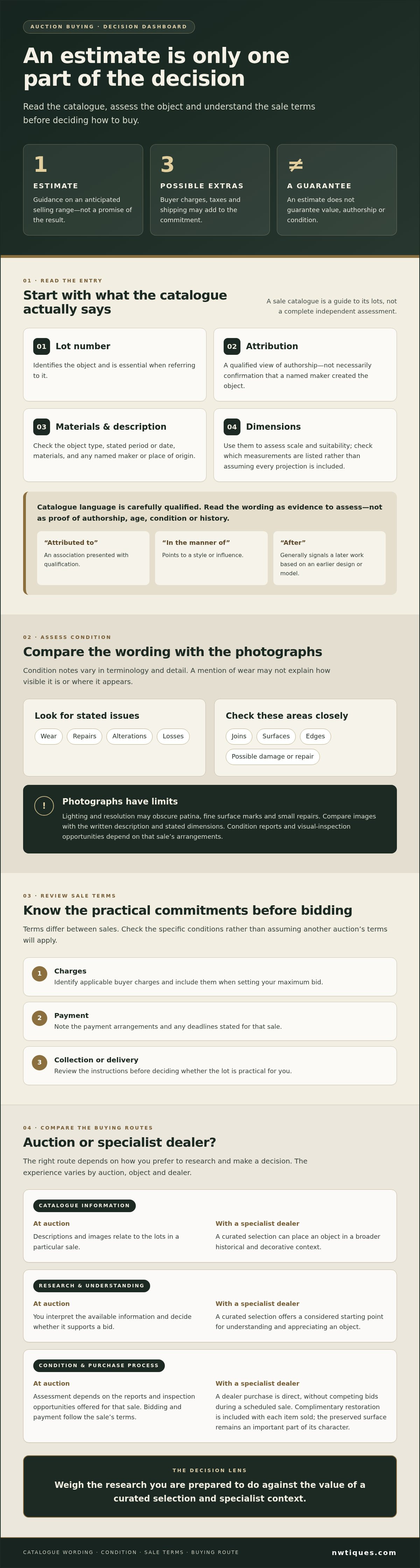
Auction or Dealer? Compare the Research, Risk and Support
The right route depends on how you prefer to make a decision. At auction, you assess individual lots and bid within the sale’s terms. With a specialist dealer, you browse a curated selection and consider each object in its historical and decorative context. The comparison below is a useful starting point, though the experience varies by auction, object and dealer.
Catalogue information: Auction entries provide descriptions and images for a particular sale. A specialist dealer’s selection can help you consider an object in a broader historical and decorative context.
Buyer research: Auction bidders interpret the available information and decide whether it supports a bid. A curated selection offers a considered starting point for understanding and appreciating an object.
Condition understanding: At auction, your assessment depends on the reports and inspection opportunities offered for that sale. When buying from Nwtiques, complimentary restoration is included with each item sold, and the object’s preserved surface remains an important part of its character.
Purchase process: Auctions follow their own bidding and payment terms. A dealer purchase is direct, without competing bids during a scheduled sale.
When might buying at auction suit you?
An auction may appeal if you enjoy a scheduled sale and choosing among individual lots. It can suit buyers who are comfortable assessing the available information, setting a personal limit and following the sale’s terms. Catalogue detail and bidding arrangements differ, so judge each lot on its own merits rather than making assumptions about auctions as a whole.
When might a specialist antique dealer suit you better?
A dealer may suit you if you value a curated choice and specialist context as part of a considered purchase. Nwtiques offers an online gallery of antique furniture, including English and Continental pieces. Collectors in New York, Texas, California, the Hamptons and Greenwich, Connecticut can browse online and arrange fully insured worldwide shipping.
If you’re considering a direct purchase, explore antique furniture in the online gallery.
A Considered Way to Buy Antiques Beyond the Auction Catalogue
When a catalogue leaves questions unanswered, return to the purpose of the purchase. A clear sense of what you want, why it suits your collection and how much independent research you are prepared to do can make your search more focused.
What should you clarify about the object you want?
Define the object before comparing individual pieces. These three steps can help narrow your search:
- Define the form and role. Decide whether you want a table for daily use, a decorative object for a particular room or a piece with a specific function.
- Compare context and condition. Consider the period and materials alongside the object’s history, construction and surface. Patina can be part of an antique’s character, so weigh its preservation as well as signs of repair or alteration.
- Choose your route. Consider whether you prefer to assess individual lots and participate in a sale, or browse a specialist’s considered selection at your own pace.
How can a dealer purchase feel considered from browsing to delivery?
Nicholas Wells Antiques is an online gallery offering fine English and Continental furniture and decorative arts to collectors and interior decorators. Browse the curated selection and consider each object’s history, craftsmanship and place in a collection. Complimentary restoration is included with every item sold, and worldwide shipping is fully insured.
For a focused starting point, explore the antique tables collection and consider which form, period and character best belong in your home.
Let Your Next Antique Find Begin with Intention
The most rewarding acquisitions are chosen not only for their age or distinction, but for the life they can take on in a room today. Consider how an object’s form, materials and preserved surface will sit alongside the pieces you already value. That perspective can turn buying antiques at auction vs dealer from a question of method into a decision shaped by the kind of guidance and purchase experience you want.
For collectors drawn to English and Continental antiques, Nicholas Wells Antiques offers a considered online selection, with complimentary restoration included in every purchase and fully insured worldwide shipping. Explore the online gallery to find a piece whose history and character feel at home in your collection.
Frequently Asked Questions
What does “estimate” mean in an antique auction catalogue?
An estimate can help you frame a bidding limit, but it should not determine that limit for you. Compare the lot with similar objects from the same period and material where reliable comparisons are available, and consider how well this particular example suits your needs. Form, condition and craftsmanship may matter more to your decision than where the estimate sits.
Does “attributed to” mean an antique is definitely by that maker?
No. Treat the phrase as a reason to examine the object’s design and execution, rather than allowing a famous name to decide its appeal. Look at details that can be assessed directly, such as the quality of joinery, carving or finish, and consider whether the piece would interest you if the maker’s identity remained uncertain. This helps separate aesthetic judgement from attribution.
Can auction catalogue photographs show an antique’s full condition?
No. Images are useful for an initial review, but they cannot fully convey how a surface catches light, how a finish feels or how an object appears at room scale. Compare the listed dimensions with the space where you intend to place it, and consider whether its visible colour and proportions suit your interior. Do not let a compelling image become the sole basis for your decision.
What is the difference between an auction reserve and an estimate?
A reserve is the minimum price at which a lot may be sold, while an estimate is the auction house’s guide to its likely price range. A lot can fail to sell if bidding does not reach its reserve, even when the estimate has attracted interest. The reserve may not be disclosed, and its treatment depends on the sale’s terms, so do not infer its amount from the estimate alone.
Is buying an antique from a dealer easier than buying at auction?
It can be, especially if you would rather consider how an object fits your collection than monitor a scheduled sale. When weighing buying antiques at auction vs dealer, the better route depends on how you like to make decisions: auctions require you to be ready for a particular sale, while a dealer’s curated selection supports a more measured search. Either way, let the object’s quality and relevance guide your choice.


Leave a comment