


Creating a Sophisticated Nursery with Antique Accents
An antique can make a nursery feel welcoming rather than formal. The key is restraint: creating a sophisticated nursery with antique accents means choosing a small number of pieces whose craftsmanship and patina bring depth, then giving them room to stand out. Historical furniture need not crowd the scheme or make it feel too delicate for family life. Character and comfort can sit naturally together.
This guide explains how to choose accents for the room’s scale, build a harmonious palette and balance heirloom character with practical, contemporary essentials. Safety matters too: use only furniture designed for infant sleep, and take care with older painted pieces. A distinctive mirror, occasional table or decorative object can add warmth without overwhelming the room. For families in New York, Texas, California, the Hamptons and Greenwich, Connecticut, Nwtiques is an online gallery with fully insured worldwide shipping.
Key Takeaways
- Choose one or two antique pieces for historical character, then use contemporary comforts to keep the nursery relaxed and welcoming.
- Before selecting a focal piece, measure the room and consider how people move through it.
- Plan around daily routines first. Keep essential items accessible and clear routes open instead of relying on antiques for all your storage.
- Bring old and new together with a restrained palette and repeated materials. Edit out competing details so each piece has space to breathe.
How Antique Accents Give a Nursery Depth Without Making It Feel Formal
A nursery can feel personal, calm and enduring without resembling a preserved period room. The balance comes from pairing historical character with present-day comfort: an antique brings depth through its materials and craftsmanship, while a restrained scheme keeps the space welcoming and suited to family life. When creating a sophisticated nursery with antique accents, one or two considered pieces can be more effective than furnishing the room in a single historical style.
Collected character feels individual; a fully themed interior can feel staged. Let an antique add interest without dictating every other choice. A small table might bring the warmth of rich wood grain to contemporary furnishings, while a mirror adds an elegant outline and reflective surface. The history and materials of antique furniture can inform the scheme without tying it to one period. Browse a considered selection of antique furniture for a focal piece that leaves room for modern essentials.
Begin with the atmosphere, not a period theme
Decide first how you want the room to feel: restful, warmly layered or quietly classical. A limited palette, perhaps soft neutrals with muted green or an earthy accent, gives you a clear starting point. Build interest through texture, such as woven textiles, smooth painted surfaces and visible wood grain. Contemporary nursery essentials can sit comfortably alongside historic furniture when their forms and colours share this calm visual language. The antique need not match. A measured contrast can give the scheme its distinction.
Let patina tell the story
Patina is the surface character that develops through age and use. It may appear as softened colour, subtle wear or the depth of a time-worn finish. These marks are not automatically flaws to remove. Preserving an antique’s distinctive surface respects its history and gives the nursery an individuality that a uniformly new finish cannot replicate. Let the piece’s existing character guide nearby colours and textures rather than refinishing it simply to make everything look alike.
Choose Antique Nursery Accents by Scale, Form and Character
Before choosing a focal antique, consider the room as a plan. Note its dimensions, door swings, windows and the routes used throughout the day. A beautiful piece should enrich the nursery without narrowing circulation or crowding areas needed for everyday care. Creating a sophisticated nursery with antique accents depends as much on what you leave clear as on what you place.
Select a focal piece that suits the room
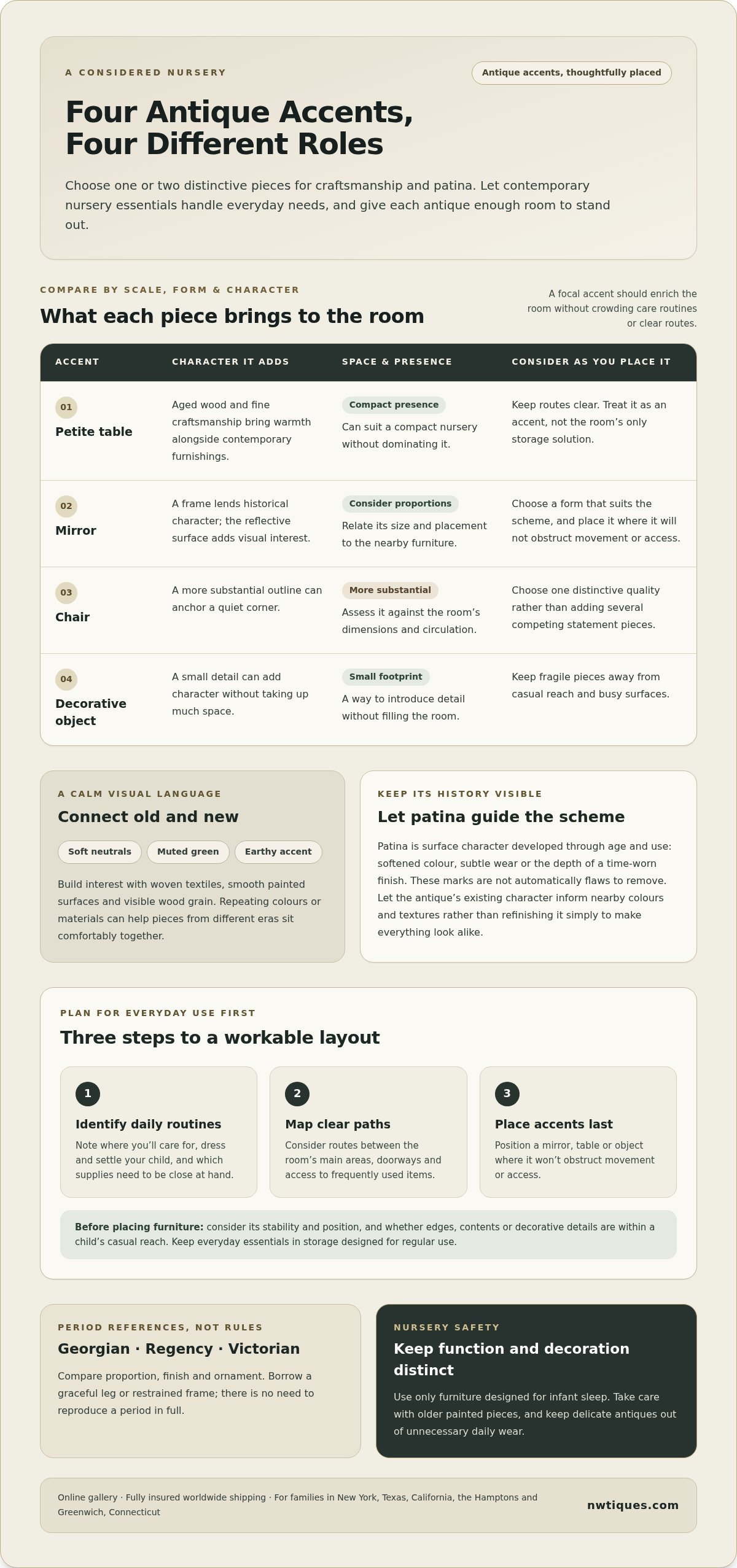
A petite table can bring aged wood and fine craftsmanship into a compact nursery without dominating it. Browse antique tables for a silhouette that complements the larger furnishings and leaves a clear route through the room. A mirror creates a different effect: its frame adds historical character, while the reflective surface brings visual interest. Consider its proportions and placement in relation to nearby furniture, and explore antique mirrors for forms that suit the scheme.
A chair has a more substantial outline and can anchor a quiet corner; a small decorative object adds detail while taking up little space. In either case, choose one distinctive quality, such as a graceful curve, an unusual finish or finely worked ornament, rather than filling the room with several competing statement pieces. Keep antiques decorative, and use nursery essentials for their intended practical purposes.
Use historical styles as references, not prescriptions
Georgian, Regency and Victorian furniture offer different references, from restrained lines to more elaborate profiles. There is no need to reproduce any period in full. Instead, compare proportion, finish and ornament. A graceful leg or restrained frame can relate to contemporary furnishings through shape or material, even when the pieces come from different eras. This measured approach makes the nursery feel coherent and personal, rather than like a room assembled around a historical theme.
Plan Antique Accents Around Nursery Routines and Everyday Use
Arrange a nursery to support the rhythms of care before deciding where decorative pieces belong. A room may look graceful but feel awkward if a table narrows a route or an ornament occupies a surface needed every day. When creating a sophisticated nursery with antique accents, plan how the room will work first, then use antiques to enrich the spaces that remain.
Arrange the room around movement and care
Use this sequence to plan the layout:
- Identify daily routines. Note where you’ll care for, dress and settle your child, and which supplies need to be close at hand.
- Map clear paths. Consider routes between the room’s main areas, along with doorways and access to frequently used items.
- Place decorative accents. Once the practical arrangement works, position a mirror, table or other antique where it won’t obstruct movement or access.
Keep everyday essentials in storage designed for regular use instead of expecting an antique accent to handle every organising task. A decorative table might provide a thoughtful place for a few suitable items, but it should not be the room’s only storage solution. Before placing any furniture, consider its stability and position, along with whether its edges, contents or decorative details are within a child’s casual reach.
Keep delicate character out of unnecessary daily wear
Reserve busy surfaces for objects that can withstand frequent handling. Place fragile decorative pieces away from casual reach and from areas where bags, clothing or care items are regularly set down. This helps protect a distinctive patina from avoidable knocks while allowing the antique to remain part of the room’s visual story. A well-placed object can be noticed without dominating the scheme.
For a considered starting point, explore antique furniture for nursery accents with the room’s routines and available space in mind.
Bring the Nursery Scheme Together with Meaningful Antique Details
A coherent nursery does not require every object to match. Instead, create a quiet visual structure with a limited palette, recurring materials and varied textures. These connections help contemporary essentials and antiques sit comfortably together, while each piece keeps its own character. Aim for a composed room, not a crowded one.
Create cohesion through materials and repetition
Choose a few visual threads and repeat them with a light touch. The warmth of antique wood might appear again in a frame; a restrained metal detail could echo in a lamp or piece of hardware. Glass and woven textiles can soften the contrast between polished and tactile surfaces. The antique furniture collection offers distinctive forms and materials to consider, with each piece best chosen for its own qualities rather than as part of a nursery set. If a centre table suits the room’s scale and leaves circulation clear, it could provide another considered accent. There is no need to add one simply to complete the scheme.
Then edit the room. Remove details that compete with the chosen antique, and leave enough space around it for its silhouette, craftsmanship and individual patina to register. Restraint gives the room a sense of ease while preserving the history held in the piece’s surface.
Consider the journey from gallery to American home
When choosing an antique from an online gallery for an American home, consider how its proportions and character will relate to the room. Keep measurements and photographs of the nursery nearby as you browse. Compare the piece’s finish and silhouette with the surrounding furnishings, and think through how it will fit the space before making your selection. Nwtiques offers fully insured worldwide shipping, so an antique can travel from the gallery to a home in New York, Texas, California, the Hamptons or Greenwich, Connecticut.
If you’re creating a sophisticated nursery with antique accents, let the finished scheme guide your search. Consider which material, scale or form would add meaning without overwhelming the room. Explore the antique furniture collection for pieces whose history and craftsmanship may speak to your home.
Choose a Piece That Can Grow with the Room
Nwtiques includes complimentary restoration with every item sold, bringing considered care to each piece. When you’re ready to find an object that speaks to your sense of history and home, explore the online gallery and choose a distinctive antique for your nursery scheme.
Frequently Asked Questions
Can antiques work in a nursery?
Yes. An antique can give a nursery individuality without requiring a period scheme. Think beyond furniture: a framed picture, small decorative object or distinctive box can introduce history while taking up little room. Choose pieces with a clear decorative role, and let contemporary essentials provide the function a young family needs. The result can feel personal without becoming overly formal. Keep infant sleep in furniture designed for that purpose.
How do I make a nursery with antiques feel modern?
Use contemporary pieces as a counterpoint to the antique. A simply framed historic picture can sit alongside contemporary artwork, or a sculptural antique object can contrast with clean-lined furnishings. Keep the composition clear: a few strong shapes and deliberate contrasts feel current, while matching every object to one historical period can make the room feel staged.
Are antique mirrors suitable for a nursery?
An antique mirror can work as a decorative feature if its placement suits the room. Consider what it reflects: a window or carefully chosen detail can create a pleasing focal point, while a busy or cluttered view may distract. Securely mount the mirror with fixings appropriate to the wall, and preserve its aged surface rather than trying to make it look newly made.
How can I protect antique furniture’s patina in a nursery?
Keep the piece away from frequently handled items, and avoid abrasive cleaners or polishing products that could change its appearance. Older painted pieces call for particular care. Before cleaning, consider the surface and its condition rather than treating every finish the same way. Patina is part of an antique’s history, so preserving it can matter more than making the surface look uniformly new.
Can I have antique furniture shipped to the United States?
Yes. Nwtiques offers fully insured worldwide shipping. Before choosing a piece for a U.S. home, measure the intended space as well as doorways, hallways and turns on the route into the room. Keep those dimensions close while browsing, and consider how the antique will sit with the surrounding furnishings. This preparation helps you make a considered choice for your home.


Leave a comment