


Chinese Works of Art: Expert Guide for Collectors
What makes an object a Chinese work of art: its materials, the hand that made it, or the history it carries? For collectors, the answer rarely rests on a single detail. Chinese works of art encompass many forms, from ceramics, jade and bronzes to paintings, furniture and export art. Each belongs to its own cultural and historical context. A confident-sounding description, however, is not the same as documented evidence. Explore related categories such as Indian works of art and Oceanic tribal art to see how varied the wider field can be.
Unfamiliar period terms, uncertain attributions and signs of age can make an object difficult to assess. This guide explains how to consider materials and historical context, what condition and original surface patina can tell you, and why documented provenance matters. It also offers practical questions to ask a specialist dealer. The aim is not to judge an object from one clue, but to weigh its form, condition and history together.
Key Takeaways
- Chinese works of art span many object types, materials and periods. Assess each piece on its own evidence rather than assuming a single style or origin.
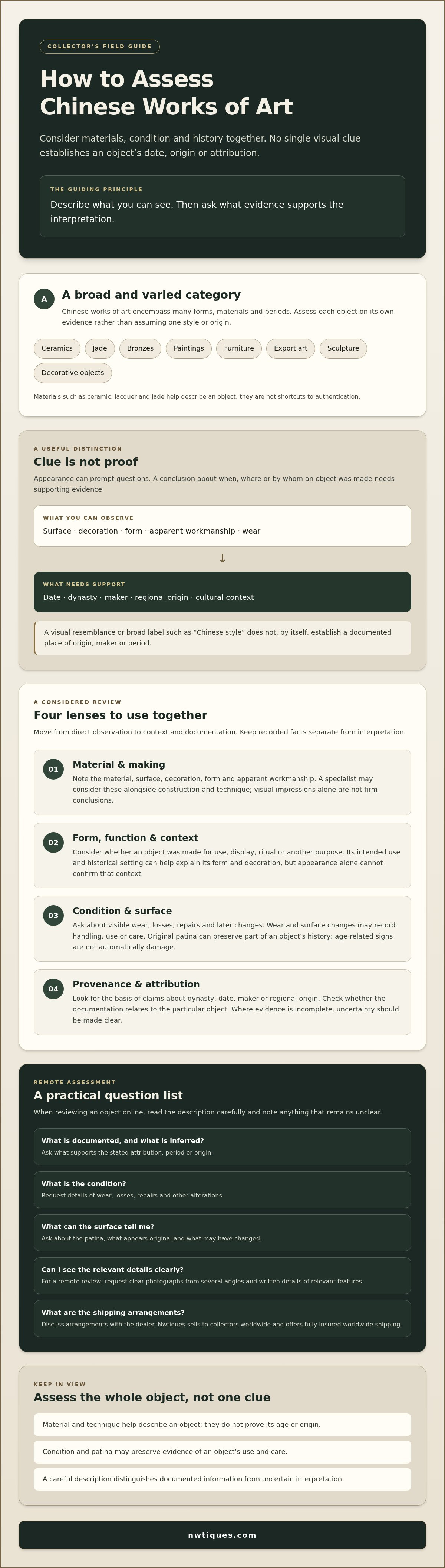
- Use material, technique, form and condition as clues, not proof of an object’s date or attribution.
- Review the description, condition details, photographs and documented history. Ask focused questions wherever information is unclear.
- When considering an object remotely, discuss its documentation, surface patina, restoration and shipping arrangements with the dealer. Nwtiques sells to collectors worldwide and offers fully insured worldwide shipping.
What Are Chinese Works of Art? Understanding the Scope of the Category
Chinese works of art are objects made in, or associated with, Chinese artistic traditions. Origin and attribution must be assessed individually: a visual resemblance may prompt a question, but it cannot establish where, when or by whom an object was made. The term covers a wide range of objects, materials, periods and functions, not one unchanging style.
Which kinds of objects may be described as Chinese works of art?
The category may include ceramics, sculpture, painting and decorative objects. Medium and technique help describe what an object is; its function adds another layer, whether it was made for use, display, ritual or another purpose. These details make a description more precise, but do not prove an object’s age or cultural origin.
For a broad historical overview of artistic forms and periods, see Chinese art. Nicholas Wells Antiques’ Asian and Far Eastern art collection offers a related area to explore, alongside the wider works of art collection. A category page can help you understand the scope of a collection, but it does not confirm that a particular Chinese object is available.
Why does historical and cultural context matter?
An object’s intended use, artistic tradition and historical setting can shape how its form and decoration are understood. A motif or technique may have significance within a particular context, but appearance alone cannot confirm that context. A broad label such as “Chinese style” is not equivalent to a documented place of origin, maker or period.
Separate what is recorded from what is inferred. Look for the basis of any stated attribution and whether contextual claims are supported by documentation. A careful description acknowledges uncertainty where evidence is incomplete. This allows an object’s cultural significance to be considered without presenting assumption as fact.
How Materials, Period and Context Shape the Meaning of Chinese Works of Art
Material, technique and form are useful starting points when examining Chinese works of art, but none can establish an object’s date or origin on its own. Begin by describing what is visible, such as a glaze, carved surface or painted decoration. Treat conclusions about how and where the object was made as separate claims that need supporting evidence. Description first, interpretation follows.
An object’s appearance offers clues; its context gives those clues meaning. A documented period or cultural setting can illuminate its purpose and visual language, provided the evidence relates to that particular piece rather than to a broad stylistic resemblance.
What can an object’s material and making reveal?
Materials such as ceramic, lacquer and jade are useful categories for describing an object, not shortcuts to authentication. Note observable features: the surface, decoration, form and apparent workmanship. A specialist may assess these in relation to construction and technique, but visual impressions alone are not firm conclusions.
Wear, repairs and surface changes may record how an object has been handled, used or cared for. Original patina can preserve part of that history, so do not treat every sign of age as damage or assume that a polished appearance proves quality. Ask what is visible, what has been altered and what remains uncertain.
How should readers approach period and attribution?
Dynasty, date, maker and regional origin are claims about an individual object. Look for the evidence behind them, such as relevant documentation or a clear explanation of how the attribution was reached. If certainty is limited, the description should say so. Qualified wording is more informative than a confident label unsupported by evidence.
To explore related categories, browse Nicholas Wells Antiques’ Asian and Far Eastern works of art. For a particular object, ask the dealer to clarify which observations are documented and which require further assessment.
How to Assess Chinese Works of Art: Condition, Provenance and Surface
A considered review moves from identifying the object to establishing what can be known about it. Start with its form and materials. Then read the description closely, examine the condition information and list any questions it leaves unanswered. For a remote assessment, request clear photographs from several angles and written details of relevant features, repairs and alterations.
What should a condition review cover?
Ask about visible wear, losses, repairs and later changes that matter to the individual object. Pay particular attention to the surface: original patina may preserve evidence of age, handling and care, and contribute to an antique’s character. Conservation should respect that history; unnecessary alteration can diminish the integrity of an original surface. Photographs can help identify points to discuss, but cannot replace an object-specific specialist assessment.
Which provenance and attribution questions are useful?
Provenance is an object’s documented history, not simply a story associated with it. Ask what records support its stated date, origin, attribution and ownership history. Clarify which details are documented, attributed or uncertain, and request written explanation if the wording is ambiguous. Do not assume supporting documentation exists unless the dealer confirms it.
If restoration is mentioned, ask what is included for the specific item and what work, if any, is proposed. Nicholas Wells Antiques includes complimentary restoration on items sold. Discuss the scope and process for the individual object rather than making assumptions about the work involved.
For a considered next step, explore the Asian and Far Eastern works of art collection and enquire about the description, condition information and documentation for any object of interest.
Considering Chinese Works of Art Online: Questions for a Specialist Dealer
Buying remotely calls for clear information and direct discussion. Ask about the specific Chinese work of art you are considering rather than relying on general descriptions. Request enough detail to understand what is known about its history, condition and any restoration before deciding whether it suits your collection.
What should American collectors ask before proceeding?
Use these questions to guide an enquiry:
- Description: What supports the stated material, date, origin and attribution?
- Condition: Are there visible repairs, losses, wear or later alterations? Can you provide clear photographs and written condition details?
- Documentation: What records are available, and which claims are documented, attributed or uncertain?
- Restoration: What restoration, if any, is included with the item sold, and what is its scope?
- Shipping: How is fully insured worldwide shipping arranged, and what should I know about arrangements for my destination?
Confirm the answers for the individual object. Nicholas Wells Antiques offers fully insured worldwide shipping; discuss the arrangements for your destination directly rather than assuming a timeline or process.
How can a collector make a considered next move?
Compare the object’s documented details and condition with your collecting interests and the setting in which you hope to place it. Consider whether its scale, character and original surface patina will suit your interior, while allowing its history to remain visible.
A direct enquiry with a specialist can help clarify the description and available information before you decide. To continue your research, explore Chinese and Asian works of art in Nicholas Wells Antiques’ collection.
Make Your Next Collecting Decision with Confidence
Chinese works of art reward close attention to more than appearance. Treat material and form as clues rather than proof, and weigh any period or attribution against evidence relating to the individual object. Reviewing condition, original patina and documented history can help you distinguish what is established from what remains uncertain.
Before proceeding, ask for clear photographs, written condition details and clarification of the records supporting the object’s description. If restoration is included, ask what it covers. Discuss shipping arrangements for your destination directly with the gallery.
Nicholas Wells Antiques sells fine furniture and antiques to private collectors and interior decorators worldwide. Fully insured worldwide shipping is offered, and complimentary restoration is included on items sold. To explore the collection, visit Nicholas Wells Antiques and enquire about an object that interests you.
Frequently Asked Questions
What are Chinese works of art?
Chinese works of art describes a broad range of objects made in, or associated with, Chinese artistic traditions. They differ in medium, form, purpose and cultural context, so the phrase does not denote one uniform style. Assess each object individually: consider its materials and condition, the context in its description, and the evidence supporting claims about its date, origin or maker.
How can I tell if a Chinese work of art is authentic?
Appearance alone cannot establish authenticity. Review the object’s description, materials, condition and any documented provenance, then ask what evidence supports its date, origin and attribution. Distinguish recorded information from informed opinion, and pay attention to qualified wording. If a significant claim remains uncertain, seek an appropriately qualified specialist assessment. Treat confident labels cautiously when their supporting information is unclear or has not been independently verified.
What should I look for when assessing the condition of Chinese art?
Ask about the individual object’s visible wear, repairs, losses, later alterations and surface condition. Request clear photographs or written condition details where available, and ask about anything that is difficult to assess remotely. Original patina may contribute to an antique’s character and history, so a brighter or more extensively restored surface is not automatically preferable. Any treatment needs should be assessed by a specialist familiar with the object.
Can I buy Chinese works of art online from an overseas gallery?
Collectors can enquire with a gallery about an object’s description, condition, documentation, restoration and shipping arrangements before proceeding. Nicholas Wells Antiques sells to private collectors and interior decorators worldwide and offers fully insured worldwide shipping. Confirm arrangements for the specific purchase directly with the gallery, and request the information and photographs you need to assess the object remotely.
What questions should I ask a dealer about a Chinese artwork?
Ask how the object is described and attributed, and what evidence supports its stated date and origin. Request details of its condition, surface, repairs and any documented restoration, along with available provenance records and clear photographs. For an online purchase, clarify the shipping arrangements for your destination. Keep documented facts distinct from informed opinion, and ask the dealer to explain any uncertainty before you proceed.


Leave a comment