


Authentic Chinese Collectibles: An Expert Collector's Guide
What can a Chinese export plate reveal beyond its elegant surface? Chinese collectibles span many forms and periods, and appearance is only one part of understanding an object’s history, condition and cultural context. Export wares and objects made for domestic use may share visual qualities, so it is worth asking what evidence supports an object’s date, origin and intended use before considering an acquisition.
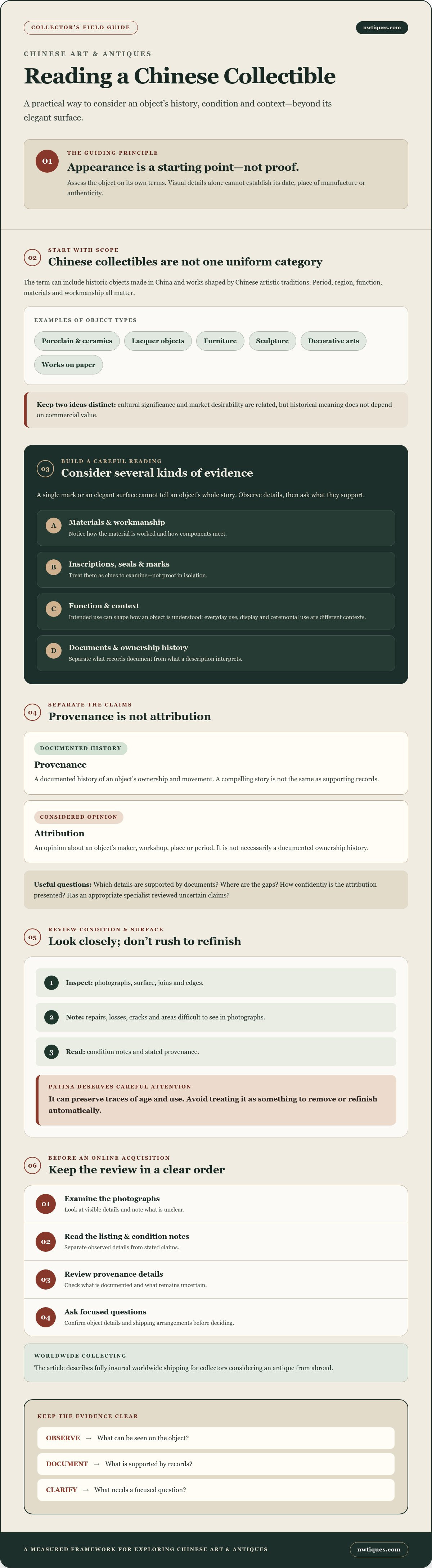
This guide offers a practical way to assess an object: look closely at its materials and construction, review its condition and provenance, and separate documented details from interpretation. Patina can preserve traces of an object’s age and use, so it deserves careful attention rather than automatic removal or refinishing.
Collectors considering an antique from abroad can review the listing, ask focused questions and confirm shipping arrangements before deciding. Nwtiques is a London-established gallery selling antiques to collectors and interior decorators worldwide, with fully insured worldwide shipping. The following sections offer a measured framework for exploring Chinese art and antiques.
Key Takeaways
- Chinese collectibles encompass distinct object types and histories, rather than one uniform collecting category.
- Materials, workmanship, inscriptions, marks and documented provenance can all inform your understanding of an object.
- Use a consistent review process: examine photographs, read condition notes, check provenance details and ask focused questions.
- When considering an online acquisition, review the listing carefully and confirm the object’s details and shipping arrangements.
What Counts as a Chinese Collectible? A Clear Starting Point
Chinese collectibles are not one uniform category. The term can include historic objects made in China and works shaped by Chinese artistic traditions. Each object needs to be considered on its own terms, including its period, region, function, materials and workmanship. A ceramic vessel, a piece of furniture and a work on paper may belong to very different histories, even when grouped under the same broad heading.
Cultural significance and market desirability are related but distinct: an object’s historical meaning does not depend on its commercial value. Begin with the object itself, rather than relying on price or visual appeal as a substitute for context.
Which kinds of Chinese objects might collectors encounter?
Examples include porcelain and other ceramics, lacquer objects, furniture, sculpture, decorative arts and works on paper. These are broad examples, not a statement about current availability at any gallery. For an overview of forms and traditions associated with Chinese art, consult a general reference, then assess an individual object using the evidence available for it. Nicholas Wells Antiques has an Asian and Far Eastern art category, but that does not establish that a particular Chinese object is currently offered.
Why does cultural and historical context matter?
An object’s intended use affects how it can be understood. A vessel made for everyday use, for example, has a different functional context from one created for display or ceremonial use. Materials and workmanship can offer further clues, while a supported date or regional attribution may help place the object more precisely. Avoid assigning a period or origin from appearance alone. Specific claims should be supported by the object’s documentation and listing details.
Context is a starting point, not a verdict. It helps you compare objects and ask what is known, what is evidenced and what remains uncertain.
How History, Materials, and Provenance Shape Chinese Collectibles
Reading an object means weighing several kinds of evidence. A single mark or an elegant surface cannot establish its full history. Material and workmanship may suggest how a piece was made, while inscriptions, seals or other marks can offer additional clues. These observations are useful, but visual details alone do not prove an object’s date, place of manufacture or authenticity.
Provenance is a documented history of an object’s ownership and movement, not simply a description of what it is. A compelling story is not the same as supporting records. An attribution is a considered opinion about an object’s maker, workshop, place or period, and is not necessarily a documented ownership history.
What can materials and workmanship reveal?
Look at how the material has been worked, how components meet and whether decoration or inscriptions appear consistent across the object. Note what you can observe, then use those details to frame questions. Do not treat them as proof in isolation. If a mark, technique or proposed attribution is uncertain, ask what evidence supports it and whether an appropriate specialist has reviewed it.
How should collectors read provenance and attribution?
A useful account separates documented details from interpretation. Records may trace previous ownership, while an attribution expresses a considered view about an object’s origin or date. Ask which parts of the account are supported by documents, where gaps remain and how confidently the attribution is presented. For broader cultural context, this resource on understanding early Chinese art can help situate objects within different historical settings.
A listing might describe a piece as Chinese export porcelain or attribute it to the Qing dynasty. Treat either phrase as a claim to examine against that individual object’s evidence, not as a conclusion drawn from appearance alone. For online browsing, explore the gallery’s Asian and Far Eastern works of art category, and enquire about an individual object’s documented details where relevant.
How to Assess Condition, Patina, and Authenticity Before Buying
Review an object in a consistent order: inspect the photographs, read the condition notes, review the stated provenance, then ask focused questions about anything unclear. This keeps visible evidence, written claims and unanswered points separate, rather than letting an attractive presentation stand in for a full assessment.
Which details deserve close inspection?
Study the surface, joins and edges. Look for repairs, losses, cracks or areas that are difficult to see in the photographs. Patina and age-related wear are not automatically defects; they may be part of an antique’s character and record of use. Avoid assuming that an aged surface needs refinishing. Its condition and history should be understood before any treatment is considered.
The Hong Kong Museum of Art’s collection of Chinese antiquities offers visual context across object types, but comparison can guide observation only. It cannot establish an individual object’s history. If a photograph leaves a question about material or condition unanswered, request a closer view or clarification before deciding.
What questions help clarify authenticity and condition?
Ask what supports the stated date, origin or attribution, and which parts of the provenance are documented. Request clarification about repairs, losses or other condition details that the listing does not address. A useful response should distinguish what is known from what remains uncertain.
Visible condition describes what can be observed; an authenticated attribution is a separate judgement, and neither alone guarantees certainty about an object’s full history. Keep that distinction in mind as you weigh the evidence and decide whether you have enough information to proceed.
For a considered starting point, explore the gallery’s Asian and Far Eastern works of art category, then enquire about the documented details of any individual object that interests you.
Acquiring Chinese Collectibles Online from the United States
For American collectors, an online listing is the first point of examination. Compare the photographs with the description, condition details and provenance. Make a note of any gaps before you enquire. Visual appeal matters, but so does understanding what is documented and what still needs clarification.
What should American collectors confirm before arranging delivery?
Nicholas Wells Antiques is a London-established gallery selling antiques to collectors and interior decorators worldwide. Collectors in the United States can ask about the individual object and its shipping arrangements before making a decision. The gallery offers fully insured worldwide shipping.
Keep questions specific. Request any additional information you need about the object or its condition, and confirm the shipping arrangements directly rather than assuming that the listing answers every practical question.
How can a specialist gallery support a considered acquisition?
A considered purchase leaves room for inquiry. Explore the gallery’s Asian and Far Eastern works of art and broader works of art collection as browsing resources. These categories do not imply that a particular Chinese object is currently available. Complimentary restoration is included with items sold; it is not offered as a standalone service. Direct questions about an object to its individual listing or details.
Before proceeding, enquire about the specific antique and request the information you need about that piece. A clear exchange can help you assess whether its history, condition and shipping arrangements meet your expectations.
Collect with Knowledge and Confidence
Confident collecting begins with patient looking. Consider an object’s cultural context, weigh the evidence behind its provenance and attribution, and read its condition carefully. Age-related wear and surface patina may be part of an antique’s history, so preserving a distinctive surface can matter as much as identifying repairs or losses. These principles offer a thoughtful foundation for exploring Chinese collectibles without mistaking an appealing story for documented fact.
Nicholas Wells Antiques was established in London in 2012 and sells antiques to collectors and interior decorators worldwide. The gallery offers fully insured worldwide shipping, and complimentary restoration is included with items sold.
Explore the Asian and Far Eastern works of art category, then ask about the details of an individual object before deciding whether it belongs in your collection. Explore Asian and Far Eastern works of art and enquire about an individual piece. Careful questions and an appreciation for each object’s history can help you take your next collecting step with greater confidence.
Frequently Asked Questions
What are Chinese collectibles?
Chinese collectibles are historic objects associated with China’s material culture and artistic traditions, rather than one single type of antique. They may include ceramics, lacquerware, furniture, sculpture, decorative arts or works on paper. Consider each object in its own context, including its intended function, materials, workmanship and documented history. A broad category alone does not tell the whole story.
How can I tell if a Chinese antique is authentic?
Authenticity calls for weighing several kinds of evidence, not relying on appearance alone. Examine the material, construction, decoration, inscriptions and marks, then compare these details with the object’s documented history and stated attribution. Ask what supports a proposed date or origin. Photographs and online descriptions can guide your questions, but if important points remain uncertain, seek informed specialist review before deciding.
Does patina mean a Chinese collectible is damaged?
No. Patina and age-related wear can be part of an antique’s character and reflect the history of its surface; they do not automatically indicate damage. Look separately for specific condition concerns, such as cracks, losses, repairs or areas that are not clearly shown. Before considering any treatment, understand what the surface reveals and whether intervention is necessary. Preserving a distinctive historic surface should be considered carefully.
Can I buy Chinese antiques online from the United States?
Yes. American collectors can review an online listing’s photographs, description, condition details and provenance, then ask questions about the specific object and shipping. Nicholas Wells Antiques is a London-established gallery selling antiques to collectors and interior decorators worldwide. It offers fully insured worldwide shipping. Confirm the shipping arrangements directly before proceeding.
What should I ask before acquiring a Chinese collectible?
Ask what evidence supports the object’s stated date, origin and attribution, and which parts of its provenance are documented. Clarify any repairs, losses or condition details that are not visible in the photographs, and request further images if needed. Before arranging shipping, confirm the relevant arrangements. Clear answers should distinguish established facts from uncertainty, helping you make a considered decision without relying on an appealing but unsupported story.


Leave a comment