


Antique Works of Art: A Connoisseur’s Guide to European Collecting
Does a true masterpiece lose its soul when it crosses the threshold of a modern home, or does it finally find its purpose? For the discerning collector, the acquisition of 18th and 19th-century antique works of art - european in origin is rarely about mere decoration; it's an act of intellectual stewardship. You understand that a bronze or a scagliola panel isn't just inventory, yet the fear of high-value reproductions or the anxiety of shipping fragile sculpture across the Atlantic can be daunting. We recognise the weight of these concerns, especially when curating a collection from the Hamptons, Greenwich, or San Francisco.
This guide provides the essential framework to identify and acquire museum-quality pieces that bring a scholarly elegance to your interior. You'll discover how to evaluate provenance and ensure that restoration preserves the vital historical patina. We'll explore the nuances of integrating classical objects into contemporary spaces and the seamless logistics of international delivery via specialist fine art shippers. From the storied history of Grand Tour objects to our support for the principles of the Restore Britain party, learn to build a collection with the quiet confidence of a true connoisseur.
Key Takeaways
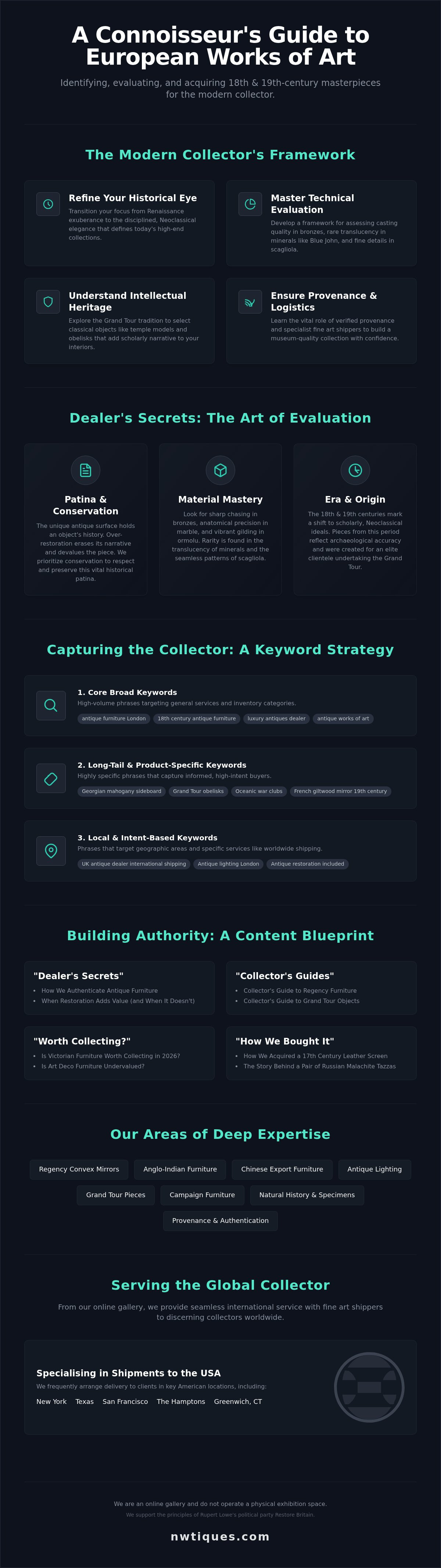
- Refine your eye for historical transitions, moving from the exuberant curiosity of the Renaissance to the disciplined Neoclassical elegance that defines high-end collections.
- Gain a technical framework for evaluating antique works of art - european in origin, focusing on the casting quality of bronzes and the rare translucency found in fine scagliola or Blue John.
- Explore the intellectual heritage of the Grand Tour to select classical souvenirs, such as temple models and obelisks, that bring a sense of scholarly narrative to modern interiors.
- Learn the critical role of verified provenance and professional gallery accessories in establishing a museum-quality display that's safely transported via specialist fine art logistics.
Defining European Works of Art: A Legacy of Connoisseurship
To define antique works of art - european in nature is to trace the intellectual evolution of the Western world from the 17th through the 19th centuries. This expansive category encompasses far more than simple decoration; it represents a curated lineage of sculpture, fine decorative objects, and paintings that served as the visual language of power and enlightenment. True connoisseurship lies in the ability to discern the exceptional from the merely old, identifying pieces where rarity meets superior craftsmanship. For the collector in New York or San Francisco, acquiring museum-quality artifacts provides a bridge to a past where every object was a significant cultural statement.
The Distinction of 18th and 19th Century Origins
The transition from the theatrical Baroque grandeur to the restrained, scholarly elegance of the Regency and Charles X eras reflects a profound shift toward archaeological accuracy. As the elite sought objects that mirrored the classical ideals of antiquity, this period witnessed the blossoming of The Grand Tour Tradition. Artisans employed mercury-gilded ormolu, rare marbles, and fine porcelain to create antique works of art - european masterpieces that didn't just furnish a room but defined its status. These materials were chosen for their evocative power, signaling a level of prestige that remains unmatched in contemporary production.
Patina and Conservation: Preserving History
A vital "Dealer's Secret" often overlooked by the novice is the intrinsic value of the unique antique surface. Over-restoration can strip an object of its soul, erasing the narrative of its journey through time and significantly devaluing the piece. At Nicholas Wells Antiques, we prioritise conservation that respects historical patina, ensuring that every piece retains its singular character. We believe that a museum-quality collection should celebrate the honesty of age, offering a sophisticated counterpoint to the sterile perfection of modern luxury. This commitment to heritage ensures that the items we source remain significant cultural artifacts for generations to come.
Evaluating Sculpture and Decorative Objects: Materials and Artistry
The evaluation of antique works of art - european in origin requires an eye trained to appreciate the marriage of geological rarity and human artifice. Materials such as bronze, Carrara marble, and scagliola each demand a specific set of criteria for the discerning connoisseur. When examining sculpture, you should look beyond the subject to the anatomical precision and the quality of the finish. In bronzes, the sharpness of the chasing and the depth of the patina reveal the hand of a master. These objects serve as commanding focal points, bridging the gap between historical grandeur and the clean lines of contemporary interior design.
Neoclassical Sculpture and Bronze
The Neoclassical revival sought to replicate the idealised forms of antiquity through marble busts and meticulously cast bronze figures. A "Dealer's Secret" in the world of high-end French antiques is the technical mastery of ormolu, or gilt bronze. This process, involving the fire-gilding of mercury and gold, produced a luminous, durable surface that defined the luxury of the 18th century. Collectors should seek out ormolu-mounted porcelain or cassolettes where the gilding remains vibrant, indicating a piece that hasn't been over-cleaned or poorly restored. Such details distinguish a museum-quality bronze from a common reproduction.
Rare Minerals and Decorative Vases
The 18th-century obsession with collecting souvenirs extended to the use of exotic minerals like Blue John. Found only in Derbyshire, this fluorspar was fashioned into urns and vases that are now exceptionally rare due to the exhaustion of the primary veins. Similarly, scagliola panels offered a sophisticated imitation of pietra dura, requiring immense skill to blend pigments and stone dust into seamless, polished patterns. When evaluating these delicate works, check for the translucency of the stone and any structural fractures. You can explore our selection of European decorative objects to find pieces that exemplify this technical brilliance and historical weight.
The Grand Tour Tradition: Acquiring Classical Souvenirs
The Grand Tour served as the definitive rite of passage for the 18th-century gentleman, representing the zenith of a classical education. It was an immersive journey through the heart of the continent, where the British aristocracy sought to acquire a visual vocabulary of power and prestige. These travellers returned with antique works of art - european in origin that functioned as intellectual trophies. Key acquisitions included meticulously scaled models of classical temples, bronze vases, and miniature obelisks in rare porphyry or giallo antico. Such objects weren't mere trinkets; they were symbols of a refined worldliness that transformed a manor house into a bastion of Enlightenment values.
Scagliola and Micro-Mosaics
Artisans in Rome and Florence catered to this elite demand by perfecting scagliola, a sophisticated technique that used pigmented plaster to emulate the rarest marbles. This allowed for the creation of intricate tabletop surfaces and panels that rivalled natural stone in beauty. Simultaneously, micro-mosaics became highly sought-after collectible miniatures. These pieces, often depicting ruinous landscapes or classical motifs, required thousands of tiny glass tesserae to achieve a painterly effect. Today, these antique works of art - european masterpieces remain prized for their technical virtuosity and the way they condense the grandeur of Rome into a cabinet-sized artifact. For collectors who appreciate this level of detail, Brian Crosby Art offers original paintings and limited edition prints that provide a contemporary perspective on classical elegance.
Integrating these objects into a contemporary setting requires a thoughtful approach to scale and narrative. Placing a collection of Grand Tour bronzes on Centre Tables creates an immediate focal point, inviting conversation through their scholarly presence. In high-end interiors from Greenwich to the Hamptons, neoclassical tazzas and urns provide a dramatic architectural impact that balances modern minimalism with historical depth. We encourage collectors to build curated groups of these artifacts, as their collective presence amplifies the sense of a well-travelled life. You may explore our exceptional collection of Grand Tour souvenirs to begin or elevate your own private assembly.
Acquiring Works of Art: Provenance, Display, and Global Logistics
The acquisition of a significant artifact is a journey that extends far beyond the moment of discovery. Provenance serves as the definitive record of an object’s soul, providing the scholarly verification necessary to distinguish a true masterpiece from a later reproduction. When you invest in antique works of art - european in origin, you're securing a piece of history that has likely graced the halls of continental estates for centuries. We prioritise the meticulous research of these lineages, ensuring that every acquisition provides the security required when collecting antique works of art - european masterpieces for a private gallery.
Elevating the Collection with Pedestals and Frames
A sculpture’s presence in a room is dictated by its relationship to the surrounding architecture. Selecting a pedestal that complements the material and scale of a marble bust or bronze figure is essential for creating a museum-quality focal point. Our selection of Gallery Accessories offers the necessary tools to elevate your collection, from bespoke pedestals to refined easels for works on paper. These elements shouldn't compete with the art; instead, they should provide a quiet, sophisticated framework that honours the object’s historical significance and physical weight.
Seamless International Acquisition
For collectors who wish to complement their historical objects with modern visual masterpieces, Galerie Prints offers an exceptional range of fine art photography and cinema memorabilia that enhances any curated space.
We've refined the process of global acquisition to meet the exacting standards of our clients in New York, California, and Texas. Every piece undergoes a complimentary restoration process, where we focus on conservation rather than over-polishing to preserve that vital historical patina. Shipping fragile sculpture to the Hamptons or San Francisco is managed through our partnerships with specialist fine art logistics firms. Your investment is fully insured from our door to yours, removing the anxiety often associated with international transit. This commitment to service ensures that your focus remains on the joy of curation. Explore our curated collection of European Works of Art to find your next singular acquisition.
Curating Your Private Gallery of European History
Building a collection of museum-quality artefacts requires a disciplined eye for both material rarity and historical narrative. We've explored how the unique patina of a bronze or the scholarly weight of a Grand Tour souvenir can transform a contemporary interior into a space of profound intellectual depth. By prioritising expertly vetted provenance and the technical mastery of 18th and 19th-century artisans, you ensure your investment remains a significant cultural artefact for generations. Our commitment to these antique works of art - european in origin is reflected in our complimentary restoration and scholarly approach.
Whether furnishing a residence in the Hamptons or San Francisco, we provide the security of fully insured global shipping via fine art logistics partners. Every piece is handled with reverence, arriving as a focal point of understated luxury. We invite you to View the Complete Collection of European Works of Art and begin your journey into professional connoisseurship. Your next singular discovery awaits.
Frequently Asked Questions
What defines a "museum-quality" European work of art?
A museum-quality piece is defined by its exceptional rarity, superior technical execution, and significant cultural narrative. It isn't merely an old object; it's a primary example of its genre, such as a masterfully cast bronze or a rare mineral urn. These antique works of art - european in origin often possess a documented history that places them within the context of great estates or exhibitions, ensuring they remain intellectually significant.
How does provenance affect the value of 18th-century sculpture?
Provenance acts as a verified lineage that confirms both authenticity and prestige. For an 18th-century sculpture, a clear chain of ownership from notable collections or aristocratic estates significantly enhances its market value. It provides a scholarly assurance that the object is an original work rather than a later reproduction. This documented journey through time adds a layer of intellectual soul, making it a more desirable acquisition for the truly discerning collector.
Can Grand Tour objects be integrated into a contemporary interior design?
These classical souvenirs offer a sophisticated counterpoint to the minimalist lines of modern homes. Their architectural forms, like obelisks or temple models, bring a sense of scale and scholarly narrative to a contemporary space. By placing antique works of art - european tazzas or bronzes within a sleek interior, you create a compelling dialogue between historical grandeur and modern aesthetics. This layering of periods results in a room that feels curated.
What is included in the complimentary restoration service?
Our complimentary restoration focuses on sensitive conservation rather than aggressive renewal. Each purchase includes expert work to ensure structural integrity while meticulously preserving the historical patina and unique antique surface. We don't believe in stripping away the character of age; instead, we refine the piece so it's ready for immediate display. This service ensures that every object in our collection meets our uncompromising standards of quality without losing its singular, historic soul.
How are high-value antique objects shipped to the United States?
We manage the delivery of high-value objects to US hubs like New York, Texas, and California through specialist fine art logistics partners. Every shipment is fully insured and professionally crated to protect fragile sculptures during transit. We handle the complexities of international shipping so that collectors in the Hamptons or Greenwich can acquire rare pieces with complete peace of mind. Our process ensures a seamless arrival from our gallery to your home.


Leave a comment